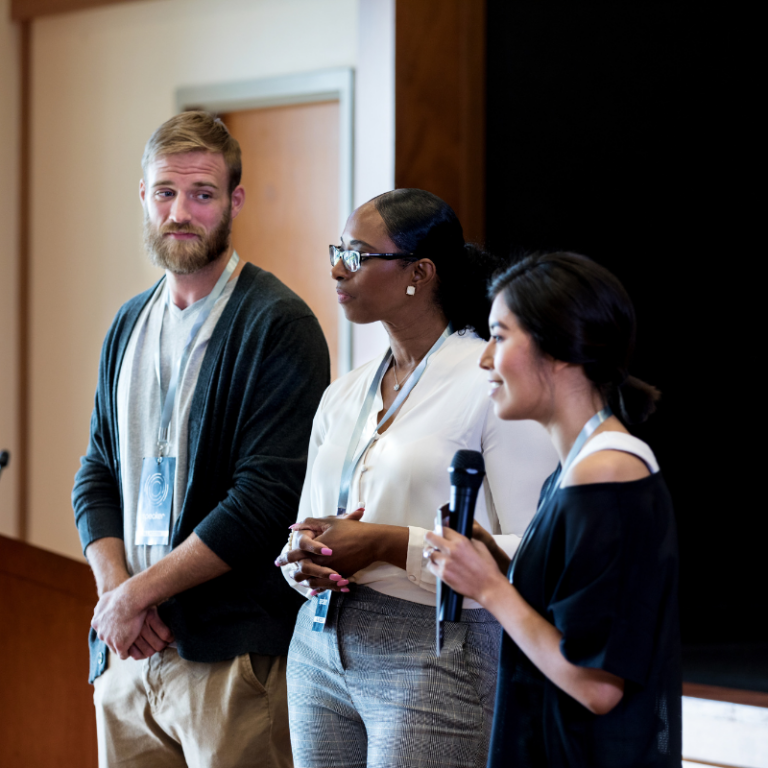
Join us for our next event as part of our “Making Work Worth Doing” sessions.
This is relevant for anyone interested in learning about meaningful work, flexibility and autonomy.
The events will take place on the 4th Thursday of each month starting in March.
We hope to see you there.
What:
- Each event in the series will feature a specific topic and a dedicated facilitator;
- At 10 to 11:30 AM Pacific Time; 1 to 2:30 PM Eastern Time;
- Upcoming event dates are:
-
- Thursday, 25 June, 2026 – ‘’Teaming with robots and AI: New STS principles in theory and practice ‘’.
UPCOMING SESSION
How do we build effective, humane and responsible teams when some “members” are robots or AI systems? And how do we prevent AI agents from drifting into the role of social actor to ensure that baked-in bias is not perpetuated by them? Or is this kind of boundary-crossing and friction desirable to facilitate collaborative sensemaking?
This session brings together researchers and practitioners at the cutting edge of STS theory to explore what “teaming” means in practice for human-AI teams.
Speakers:
- Prof Helen Hughes, Organisational Psychologist, Behaviour Lab, University of Leeds
- Prof Shankar Sankaran, Organisational Project Management, University of Technology, Sydney
Panel:
- Henrietta Hale, PhD researcher, Tavistock Institute, Coventry University and Midland4Cities Doctoral Training;
- Francis Irving, Software Engineer, Sagittal.ai
- Jennie McShannon, Systems-psychodynamic Organisational Consultant, Executive Coach and Supervisor
- Carly Riehle, Human-Centered Design Strategist and Project Manager & President at STS Roundtable
- Dr Tomasz Hollanek, AI Ethicist and AI Designer, University of Cambridge
Keynote speakers will introduce eight new STS design principles developed for Human Robot Teams, including adaptive autonomy and unpredictability management, grounded in concrete case examples.
We then will divide in two groups chaired by one of our speakers each to allow for the audience to share their experience and join the discussion with comments and questions.
In the final part we will open the floor for a candid transdisciplinary discussion: do these principles hold for Human AI Teams? Where do they need to adapt?
Following on from the panel discussion there will be ample time for the audience to share their experience and join the discussion with comments and questions.
Topics include:
💬 Boundary management when AI is integrated into organisations;
💬 The tension between human-centred design and socio-ecological demands;
💬 Accountability for unintended consequences; and
💬 The erosion of human autonomy as AI takes on complex tasks and assumes the role of social actor.
Bringing together software engineers, OD consultants, organisational psychologists, performance researchers, artists, AI designers and ethicists, experts in AI governance and systems psychodynamics as well as in STS evaluation, the panel reflects the plurality of perspectives needed to move these questions from theory into practice.
Workshop Keynote Speakers & Panellists
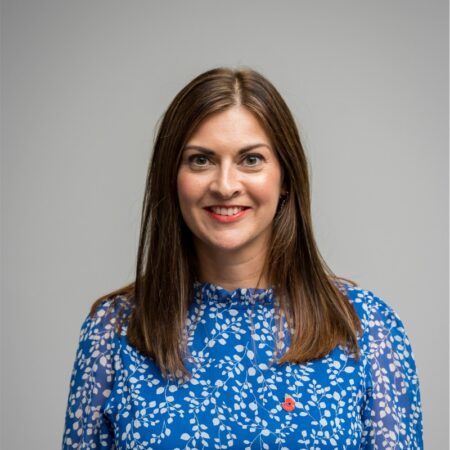
Helen Hughes, Interdisciplinary Organisational Psychologist and Associate Professor University of Leeds. Her work focuses on making socio‑technical thinking actionable through method innovation, cross‑disciplinary collaboration, and building research infrastructures that allow us to translate evidence into change. Her work has been featured in the BBC, Financial Times, Forbes and The Telegraph, and she is a regular BBC radio panellist. Helen also directs the Behaviour Lab at Leeds University Business School – working closely with senior leaders, organisations and policymakers to design and deliver executive education, consultancy and evidence‑based interventions on behavioural change in complex systems.
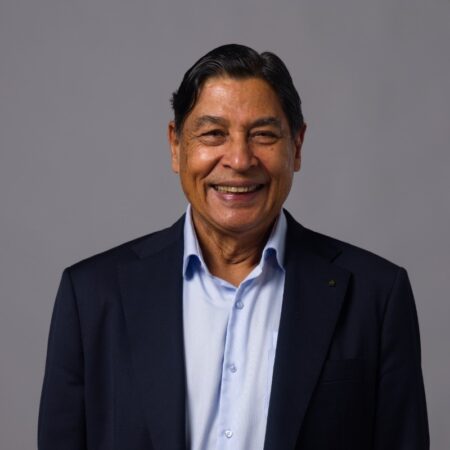 Dr Shankar Sankaran is a Professor of Organizational Project Management at the University of Technology Sydney(UTS) and my research interests are in project governance, Systems thinking and action research. I am a core member of the UTS Robotics Institute and a Chief Investigator at an Australian Research Council funded Research Hub at UTS developing human robot teaming solutions for the construction sector. My responsibility at the hub is to develop sociotechnical principles to be adopted by the project at the hub. I started life as an automation engineer and moved on to looking after projects developing and implementing computer-based control systems to the oil and gas and power industries for several years. I then joined academia tot teach technology related management courses and one of the courses I developed at UTS is to teach Systems Thinking to Managers. This course was developed over 15 years and has won an award for innovation in teaching.
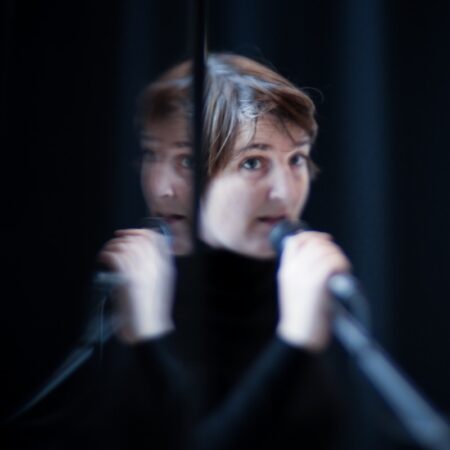
Dr Henrietta Hale is a movement and performance artist practicing across interdisciplinary fields including somatic awarenesses bridging to social sciences and history. Her current post-graduate research is with the archive of Tavistock Institute of Human Relations, through the Centre for Dance Research, Coventry University. She explores how movement and embodied re-enactment can activate archives and reimagine past encounters with group relations, automation and industrial systems.
She was co-founder of performance collective Dog Kennel Hill Project – 2004 – 2023. She is currently Lead Tutor and lecturer in embodied practices for MA/MFA Creative Practice, a partnership between Trinity Laban, Independent Dance and Siobhan Davies Studios.
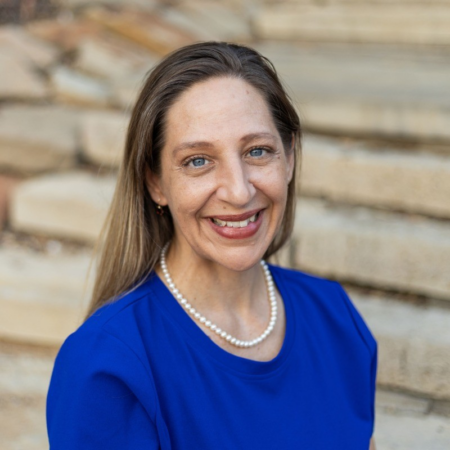
Carly Rhiele, Human-Centered Design Strategist and Project Manager & STS Roundtable President; She is the manager of a Strategic Program Management Office working on enterprise wide, large scale change initiatives. Having worked inside organizations in multiple industries including for-profit education, shipping, residential construction, and banking, Carly has nearly 20 years of experience as a covert OD consultant. She is a project manager at heart, who thrives on helping others meet their goals and has been PMP certified since 2014. Storytelling helps her connect with project stakeholders, team members and fellow project managers, to build trusting relationships and guide people towards a common goal.
Carly is also the current President of the STS Roundtable.
 Francis Irving has been programming for so long his narrative arc is lost in the mists of time. In different universes, he’s coded algorithms for CNC machines, built artificial life video games engines and made generative AI teach people languages. The common theme is to lead in using technology in new ways to improve the world. In 2004, he cofounded mySociety who make TheyWorkForYou, globally kick-starting the field of civic technology. He was CEO of a Python data science startup in 2010, getting journalists and governments tools to gain insights from diverse data. He’s currently a founding engineer at a London-based startup tackling how LLMs can be used to automate the software-development lifecycle as a whole, and the social changes needed in organisations to make that work.
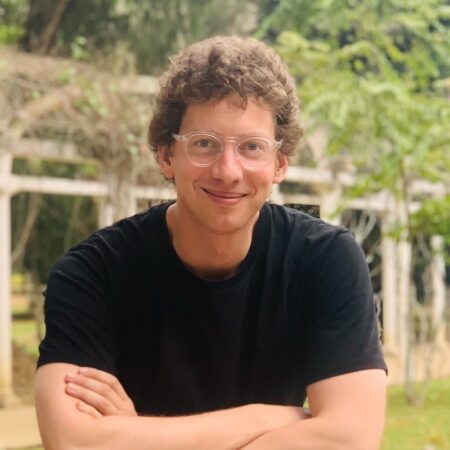 Dr Tomasz Hollanek, is an Assistant Research Professor at the Cambridge Institute for Technology and Humanity and an Affiliated Lecturer in the Department of Computer Science and Technology at the University of Cambridge. His work focuses on AI ethics, human-AI interaction, and critical design. He researches the societal impact of AI companions, including so-called griefbots, with his work featured in The New York Times, The Guardian, and The Atlantic, among many others.

Jennie McShannon is an organisational consultant and executive coach working with boards, leaders and teams across diverse cultures and sectors. Her work supports clients to make sense of the interplay between explicit and implicit factors in structural design and relational processes in service of creativity, collaboration, productivity and performance. Since 2011 Jennie has lectured and supervised on the Tavistock & Portman’s Masters programme: Leadership and Consultation: Systemic and Psychodynamic Approaches and directs on their Executive Coaching Programme. Formerly a charity chief executive, Jennie brings her own experience of leading across multi-agency partnerships and interests.
This event is delivered in partnership with the Tavistock Institute of Human Relations.
Panel convened by Dr Annja Neumann (Consultant and Artist Researcher, Tavistock Institute) and Valentina Moldovan (STS Roundtable, Community Manager).
Sign up for the sessions below.